How to Find the Best Real Estate Agent in 2026 (Without Guesswork)
25 Mar 2026Buying or selling a home is a complex process. Yet surprisingly, the way people choose a real estate agent has historically been incredibly random.
Introduction
Most buyers and sellers still:
Ask a friend for a recommendation
Pick the first agent they see on Google
Respond to whoever listed the home
Choose based on personality rather than performance
In an industry where millions of dollars are at stake, this approach makes little sense.
The truth is simple: not all real estate agents are equal.
Some consistently sell homes faster and closer to the asking price.
Others struggle to close deals, overprice listings, or lack experience in the specific neighborhood where you’re buying or selling.
For decades, the real estate industry lacked transparency.
Consumers had little access to the data needed to objectively compare agents.
But that is changing.
Platforms like Anyone.com are introducing a new approach, one that replaces guesswork with data-driven agent matching.
In this guide, we’ll explain:
Why choosing the right agent matters
The problems with traditional agent selection
What performance data actually reveals
How modern AI platforms match buyers and sellers with the right agents
How to avoid costly mistakes when choosing representation
If you’re planning to buy or sell a home in 2026 or beyond, understanding how to choose the right agent could save you tens of thousands of dollars and months of stress.
Why Choosing the Right Agent Matters More Than Ever
Real estate transactions have become more complex, we aim to reverse that trend. Real estate transactions involve:
Market pricing strategies
Negotiation expertise
Legal documentation
Local market knowledge
Buyer demand analysis
Marketing exposure
A great agent can:
Sell your home faster
Sell your home for more money
Help you win competitive bidding wars
Avoid costly mistakes in contracts
A weak agent can cause the opposite.
Common consequences of choosing the wrong agent
Sellers may experience:
Homes sitting on the market too long
Multiple price reductions
Poor marketing exposure
Low final sale prices
Buyers may experience:
Losing competitive offers
Overpaying for properties
Missing hidden issues
Poor negotiation outcomes
According to market studies across the U.S., the difference between a top-performing agent and an average one can exceed $50,000 per transaction depending on property value.
Yet most people still choose agents without seeing any performance data.
The Problem With Traditional Agent Selection
Historically, the real estate industry has operated with limited transparency.
Consumers rarely see detailed performance metrics for agents.
Instead, the industry relies heavily on:
Personal referrals
Advertising
Brand recognition
Online reviews
While these factors can be helpful, they rarely tell the full story.
For example:
An agent might have great reviews but very few transactions.
Another agent might sell dozens of homes every year but rarely ask for reviews.
Without data, it's difficult to know the difference.
Key questions buyers and sellers rarely ask
When choosing an agent, few consumers investigate:
How many homes the agent sold in the last 12 months
Average days on market
Sale-to-list price ratio
Experience in the exact neighborhood
Property type specialization
These metrics are far more predictive of success than marketing or personality.
The Rise of Data-Driven Agent Matching
Technology is finally bringing transparency to real estate agent performance.
Instead of relying on subjective recommendations, modern platforms analyze massive datasets that track agent activity.
This includes:
Historical transactions
Listing performance
Market specialization
Negotiation outcomes
Pricing accuracy
With these insights, it becomes possible to identify which agents consistently outperform others in specific situations.
This is where AI-powered platforms are transforming the process.
How AI Can Match You With the Right Real Estate Agent
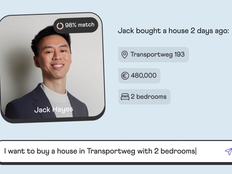
Advanced platforms like Anyone.com analyze millions of data points to match
buyers and sellers with agents.
Instead of searching through endless agent profiles, users can simply enter their situation.
For example:
Buying a home in Brooklyn under $900k
Selling a townhouse in Austin
Purchasing an investment property in Miami
The system analyzes performance data and recommends agents who:
Recently closed deals in that area
Have experience with similar property types
Demonstrate strong negotiation performance
Consistently close transactions efficiently
This dramatically improves the chances of finding the best possible agent for your specific situation.
The Data Signals That Matter Most
When evaluating real estate agents, certain performance indicators reveal far more than reviews or advertising.
Here are some of the most important signals:
1. Transaction Volume
Agents who consistently close deals often develop better negotiation and problem-solving skills.
A higher number of completed transactions often indicates:
Strong market experience
Established buyer networks
Efficient transaction management
However, volume alone is not enough.
Quality matters as well.
2. Sale-to-List Price Ratio
This metric measures how close the final sale price is to the listing price.
For sellers, a high ratio often indicates:
Strong pricing strategy
Effective marketing
Skilled negotiation
For buyers, it may indicate the agent understands competitive bidding strategies.
3. Average Days on Market
Top-performing agents typically sell homes faster.
Shorter selling times often reflect:
Accurate pricing strategies
Strong marketing exposure
Access to active buyers
However, extremely fast sales can also indicate underpricing, so context matters.
4. Local Market Expertise
Real estate is hyper-local.
An agent may perform well in one neighborhood but struggle in another.
Important factors include:
Experience with specific ZIP codes
Knowledge of local buyer demand
Familiarity with local pricing trends
Matching buyers and sellers with agents who know the exact market area is often critical.
5. Property Type Specialization
Different property types require different expertise.
Examples include:
Luxury homes
Condominiums
Investment properties
Multi-family housing
An agent specializing in one category may outperform generalists in that niche.
Why AI Matching Outperforms Manual Searches
Traditional agent searches rely heavily on human effort.
Consumers must:
Read through dozens of profiles
Contact multiple agents
Conduct interviews
Compare recommendations
Even after doing this work, it’s difficult to objectively compare agents.
AI platforms automate this process.
They evaluate performance signals instantly and present a curated shortlist of agents who match the buyer or seller's needs.
This saves time and dramatically improves the odds of finding the right professional.
How Buyers Benefit From Data-Driven Agent Matching
For home buyers, choosing the right agent can mean the difference between winning or losing a home.
In competitive markets, strong buyer agents help clients:
Craft stronger offers
Identify motivated sellers
Avoid overpriced listings
Navigate bidding wars
Platforms like Anyone.com analyze which agents recently succeeded in closing deals within specific neighborhoods.
This increases the likelihood that buyers are represented by someone who:
Knows the local market dynamics
Has relationships with listing agents
Understands pricing trends
These advantages can significantly increase the chance of securing the desired property.
How Sellers Benefit From Better Agent Matching
For sellers, choosing the right listing agent can dramatically affect the outcome of the sale.
A skilled agent can:
Price the home correctly
Attract more buyers
Create competitive bidding
Maximize final sale price
Data-driven matching helps sellers identify agents who consistently achieve strong results.
For example, the system may prioritize agents who:
Sell homes faster than market averages
Achieve higher sale-to-list price ratios
Successfully sell similar properties nearby
Instead of relying on marketing promises, sellers gain access to objective performance data.
The Future of Real Estate Agent Selection
The real estate industry is gradually becoming more transparent.
As more transaction data becomes accessible, buyers and sellers will increasingly rely on performance metrics when choosing agents.
AI-powered platforms will likely become the standard way to match consumers with real estate professionals.
Instead of random referrals, the future will look more like:
Data-driven recommendations
Verified performance insights
AI-powered transaction guidance
This shift will benefit both consumers and high-performing agents.
Top agents gain more exposure based on results rather than marketing budgets.
Consumers gain better outcomes in one of life’s most important financial decisions.
How to Find the Right Agent Today
If you’re planning to buy or sell a home, here are some practical steps to follow.
Step 1: Define Your Situation
Consider:
Location
Property type
Budget
Timeline
Clear inputs help platforms match you with the right agents.
Step 2: Compare Agent Performance Data
Look beyond reviews.
Focus on metrics such as:
Transaction history
Pricing accuracy
Local expertise
These indicators are much stronger predictors of success.
Step 3: Use AI-Powered Matching Tools
Platforms like Anyone.com simplify the search by analyzing millions of data points and recommending agents with relevant expertise.
Instead of interviewing dozens of agents, you receive a curated shortlist of professionals who match your needs.
Step 4: Speak With the Recommended Agents
Even with strong data signals, personal fit still matters.
Discuss:
Strategy
Communication style
Experience with similar transactions
The combination of data and human connection leads to the best outcomes.
Final Thoughts
Choosing the right real estate agent is one of the most important decisions in a property transaction.
For decades, buyers and sellers had little visibility into agent performance, forcing them to rely on referrals and guesswork.
Today, technology is changing that.
With the help of large-scale transaction data and AI-powered analysis, platforms like Anyone.com are making it easier to identify agents who consistently deliver results.
For buyers, this means better chances of winning the right home.
For sellers, it means faster sales and stronger prices.
And for the industry as a whole, it marks the beginning of a more transparent and performance-driven future.
If you’re preparing to buy or sell a property, exploring data-driven agent matching may be one of the smartest first steps you can take.
The era of choosing a real estate agent based on guesswork is coming to an end.
Overview
Share via
Other articles
27 Feb 2026
Finding the right real estate ...
At Anyone.com, we built Find an Agent as a true matchmaking engine, not a generic directory. Our system profiles 4.6 million agents worldwide and analyzes 12+ billion data points across 300+ million property records, so we can connect ...