Finding the right real estate agent
27 Feb 2026At Anyone.com, we built Find an Agent as a true matchmaking engine, not a generic directory. Our system profiles 4.6 million agents worldwide and analyzes 12+ billion data points across 300+ million property records, so we can connect you with an agent who matches your specific needs. And it’s 100% free for buyers and sellers.
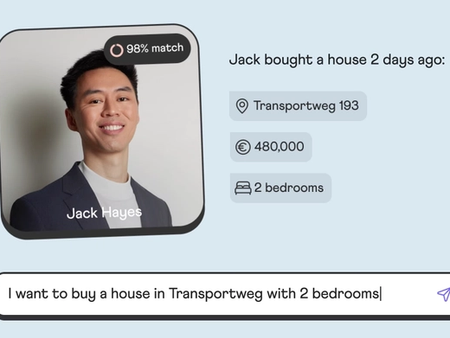
Why “find a realtor” is broken on most platforms
If you’ve ever tried to “find a realtor” online, you already know the pattern:
1: You type in a city.
2: You get a long list of names.
3: You click a few profiles.
4: You read a few reviews.
And you still end up thinking: “But who’s actually the best fit for my exact move?”
That last question is the one that matters, and it’s the one most “find an agent” experiences were never designed to answer.
At Anyone.com, we built Find an Agent as a true matchmaking engine, not a generic directory. Our system profiles 4.6 million agents worldwide and analyzes 12+ billion data points across 300+ million property records, so we can connect you with an agent who matches your specific needs.
And it’s 100% free for buyers and sellers.
Most platforms still treat agent discovery as a “search” problem:
Search by city or ZIP
Sort by “top” agents (often unclear how)
Display reviews and a few summary stats
Prompt you to contact someone
That approach breaks down because real estate isn’t one market it’s thousands of micro-markets.
The best buyer’s agent for a condo in downtown Manhattan is rarely the same best-fit agent for a brownstone in Park Slope, or a co-op on the Upper West Side, or a single-family home in Westchester.
So when an “agent finder” doesn’t adapt to:
your exact location,
your property type,
your price band,
your timeline,
and real, recent performance in that micro-market…
…it’s essentially asking you to gamble with one of the biggest financial decisions of your life.
What makes Anyone’s Find an Agent truly different
1) We built an AI-powered matchmaking engine and not just a directory
Anyone’s Find an Agent solution is powered by an AI matchmaking algorithm that analyzes 12+ billion data points to connect you with the right agent, not just “a good agent.”
This is the core difference:
A directory can show you who exists.
A matchmaking system can show you who fits.
Anyone’s engine is designed around that “fit” and it does it at global scale, with 4.6M agent profiles and 300M property records behind it.
2) Tailored matching using hundreds of parameters
Most agent tools use a handful of visible filters.
Anyone goes further. We analyze hundreds of parameters to match you with agents who fit your needs, and we tailor results using real-time market insights.
That means matching isn’t static. It adjusts as the market moves and as your search becomes clearer.
3) We match based on observed performance signals not generic labels
Here’s where the experience becomes qualitatively different. Anyone’s approach is built around what agents actually do not what they claim.
In addition to standard fit signals (area served, property type, etc.), Anyone’s matching can use performance-based signals like:
recent transactions in the exact area you care about
pricing performance (e.g., listing price vs sale price)
speed and execution (e.g., days on market)
transaction patterns that indicate real local expertise
and more qualitative compatibility signals to reduce “bad fit” matches
Example (buyer in New York):
If you’re buying in a specific neighborhood in New York, Anyone can prioritize an agent we’ve observed closing transactions right there recently and go beyond that by evaluating how they perform (pricing accuracy, speed, outcomes), not just how many reviews they have.
That’s the difference between “popular online” and “proven in your micro-market.”
4) It’s not just about the match it’s about the workflow after the match
Even if you pick the right agent, most of the process still happens across:
email threads
texts
scattered PDFs
missed calls
unclear timelines
“Did they do that yet?” moments
Anyone is designed to fix that too.
With Anyone, buyers and sellers can manage the journey in one place: match with an agent, book viewings, make offers, and move toward closing inside a single platform.
And once you’re working with an agent, you can:
track actions and updates via the activity feed (full transparency)
communicate directly in-platform (less back-and-forth, fewer missed messages)
keep the transaction organized through a shared digital workspace (documents, updates, steps)
In short: Anyone doesn’t stop at introductions it modernizes the entire collaboration layer around the transaction.
5) Invite your existing agent (if you already have one)
Already working with an agent you trust? Great you can bring them into Anyone.
Anyone explicitly supports this: you can invite an agent you already know to join, so you still get the smoother, centralized transaction experience.
“Wait, but what does it cost?”
Anyone is free for buyers and sellers!
Finding and connecting with an agent on Anyone is entirely free for buyers and sellers, you only pay your agent’s fees (as you normally would).
How can it be free?
Anyone’s model is built so the platform remains free to consumers because agents pay for the tools we provide (at a lower cost than the tools they used before).
On the agent side, Anyone positions itself as an all-in-one platform (CRM + transaction management + collaboration), and notes that the matching engine uses 12B+ data points to route motivated buyer/seller clients, while agent accounts are offered on a flat subscription basis.
This is an important point because business model affects incentives which brings us to the comparison.
Comparison: Anyone vs. other ways to find a realtor
Below is a real-world, incentive-aware comparison of the most common “find an agent” paths buyers and sellers use today.
1) Traditional directories (search + profiles + reviews)
What it feels like: “Here are 100 agents. Good luck.”
How agents are shown:
Usually searchable directories, sometimes with filters like specialties, ratings, languages, etc.
Limitations:
Often not tailored to your exact scenario beyond basic filters
Reviews can be useful, but don’t always correlate with your micro-market performance
Hard to know who’s truly active right now in the area you care about
Anyone difference:
Anyone frames agent discovery as a data-driven match (hundreds of parameters + real-time insights), not a manual scavenger hunt.
2) “Contact Agent” buttons on big portals (lead-routing + advertising)
Many major home search portals monetize by selling agent visibility and/or routing consumer inquiries to paying agents.
For example, Zillow describes agent advertising as a revenue stream and notes that agents pay to connect with buyers who click “Contact Agent” or “Request a Tour.”
Zillow also explains how Premier Agent connections occur after a buyer clicks those actions.
And Zillow’s Premier Agent FAQ notes that if an agent’s advertising budget places them in the top tier for a ZIP code, they can receive featured exposure in Agent Finder.
Realtor.com also offers lead products for agents (e.g., Connections Plus), describing how leads are generated when buyers take actions on listings and then delivered to agents, with automated follow-up included.
What this means for consumers:
You may think you’re selecting “the best agent,” but the system may be optimized around:
who paid for visibility,
who purchased lead programs,
or who is positioned to capture the inquiry.
Anyone difference:
Anyone’s model is designed around match quality + collaboration after the match, while keeping the consumer side free.
3) Referral networks (agent proposals + referral fees)
Referral marketplaces can be helpful but many are built on referral-fee economics.
UpNest, for instance, documents referral fees on successful transactions (e.g., 30% for seller referrals, per UpNest’s own help center).
Industry coverage has also described UpNest’s referral fee structure (including differing fees for buyer vs. seller leads).
What this means for consumers:
Often free to use but it’s still important to understand the incentive structure:
the platform is typically compensated by agents after closing,
which can shape which agents participate and how proposals are structured.
Anyone difference:
Anyone’s consumer experience is free, and the platform emphasizes a product/tooling subscription model for agents alongside integrated transaction workflow.
4) Data-driven agent matching (modern matching platforms)
Some services do use data and transactions to generate matches.
HomeLight, for example, describes its agent-matching platform as highlighting agents’ sales records and providing individualized recommendations after “crunching the data” and checking reviews.
Anyone difference:
Anyone’s differentiation is not just that it uses data it’s the combination of:
global-scale agent profiling (4.6M agents)
12B+ data points + hundreds of parameters + real-time market insights
and a shared digital workspace that continues delivering value after the match (activity feed, centralized collaboration, transaction management).
A simple way to think about it
When you compare agent-finding options, ask one question:
“Is this platform optimized for my outcome or for agent lead sales?”
If the system is funded primarily by advertising and paid placement, the “top” result may be the one with the biggest budget.
If the system is a basic directory, you’re doing the matchwork manually.
If the system is true matchmaking, it should be able to explain how it narrows from “thousands of agents” to “these few that fit you.”
Anyone’s Find an Agent is built to make that narrowing process smarter, more transparent, and easier to act on.
How to use Anyone’s Find an Agent tool (what to expect)
When you use Anyone to find an agent, the goal is to get from “I need help” to “I have the right agent and a clear next step” as quickly as possible.
You can expect to:
Share what you’re doing (buying, selling, or both) and where
Let the matching engine rank and recommend agents based on fit and observed performance signals
Connect and collaborate through a centralized workspace (updates, communication, visibility)
Manage steps like viewings/offers in one platform (depending on your market/flow)
And if you already have an agent you love? Invite them.
Final takeaway: the future of “find a realtor” is performance + fit + transparency
The old way of finding an agent is essentially:
search
guess
hope
Anyone is built for a different standard:
tailored matching (hundreds of parameters, real-time insights)
radical transparency (activity feed + clear collaboration)
one place to get the deal done (from match to managing the journey)
free for buyers and sellers
Head to https://anyone.com/find-agent to find your next realtor!
Other articles
05 Oct 2026
Anyone.com vs FSBO Platforms W...
We compared the leading FSBO, private-sale, flat-fee MLS, online-agent and owner-listing platforms across the 29 markets where Anyone.com operates. The differences are much bigger than their similar promise of helping you sell without ...

30 Sep 2026
The Strongest Buyer's Market o...
There are 58% more home sellers than buyers in America, nearly half of buyers are getting concessions and three in five homes sell below their original asking price. Yet a 7% mortgage still makes buying feel brutally expensive.

24 Sep 2026
Elastic Features Anyone.com: T...
A look inside the data pipelines, search technology and ranking systems that power Anyone.com and prepare the platform for AI transaction experts.

26 Aug 2026
The $100 Million Listing War: ...
Portal disputes and private listing networks are changing who gets to see a home, who controls access and whether privacy still belongs to the seller.